
- Home /
- Tech Talent & Hiring /
- What Candidates Say vs. How They Work
Tech Talent & Hiring

What Candidates Say vs. How They Work
Why execution behavior is becoming the missing layer in modern hiring.
Modern hiring still relies heavily on resumes, interviews, company names, certifications, and years of experience to evaluate potential.
But once onboard, execution reality takes over. Performance is entirely shaped by Execution Behavior:
- How people respond to changing priorities.
- How they operate under ambiguity and execution pressure.
- How they collaborate, adapt, and maintain ownership once structure becomes less predictable.
- How they continue operating when workflows, expectations, or environments begin shifting around them.
Execution behavior defines how talent sustains performance, adaptability, and ownership once structural clarity collapses and operational pressure compounds.
To better understand this execution behavior, MetaChase analyzed 105 real-world workstyle responses from top tech and AI professionals across India. Sourced from active job boards, these candidates represent Tier-1 Software Development and IT Consulting firms, yet the core findings reflect a universal market-wide sentiment. The study was tied to collaboration, ownership, adaptability, growth, and stability patterns under changing work environments.
The patterns became more noticeable in environments involving shifting priorities, faster execution cycles, and AI-assisted workflows, where consistency often depends less on capability alone and more on how effectively individuals continue operating once conditions begin changing around them.
Two professionals can possess similar experience, comparable skill sets, and strong interview performance, yet operate very differently once placed inside the same environment.
That difference is where modern hiring becomes far more complex.
What The Market Prioritizes
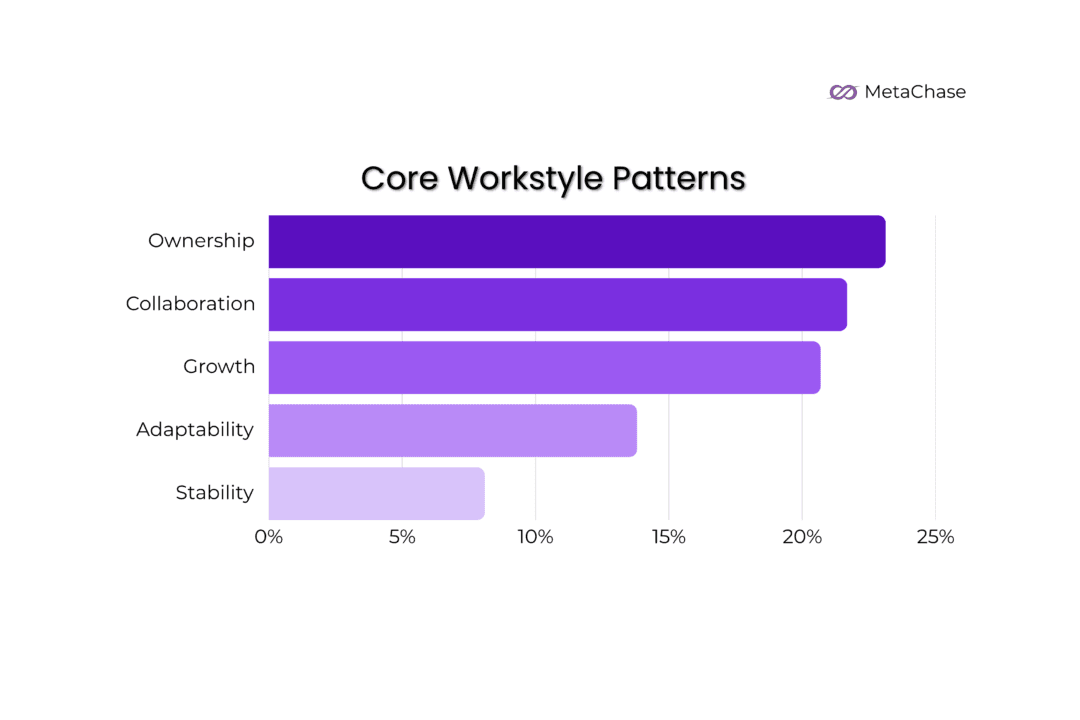
After examining individual responses, several behavioral patterns emerged more consistently than others in modern work environments.
The strongest behavioral patterns appeared around:
- Ownership
- Collaboration
- Growth-oriented execution
Adaptability, however, showed noticeably lower consistency despite becoming increasingly important in fast-changing work environments. Preference for long-term stability also appeared significantly lower throughout the broader response patterns.
Compensation also remained a noticeable decision driver, although the strongest behavioral consistency continued appearing near ownership, collaboration, and growth-oriented execution.
Notably, responses showed a close alignment between ownership and collaboration, suggesting that modern professionals are increasingly balancing team-oriented execution with independent accountability at the same time.
Growth ≠ Adaptability
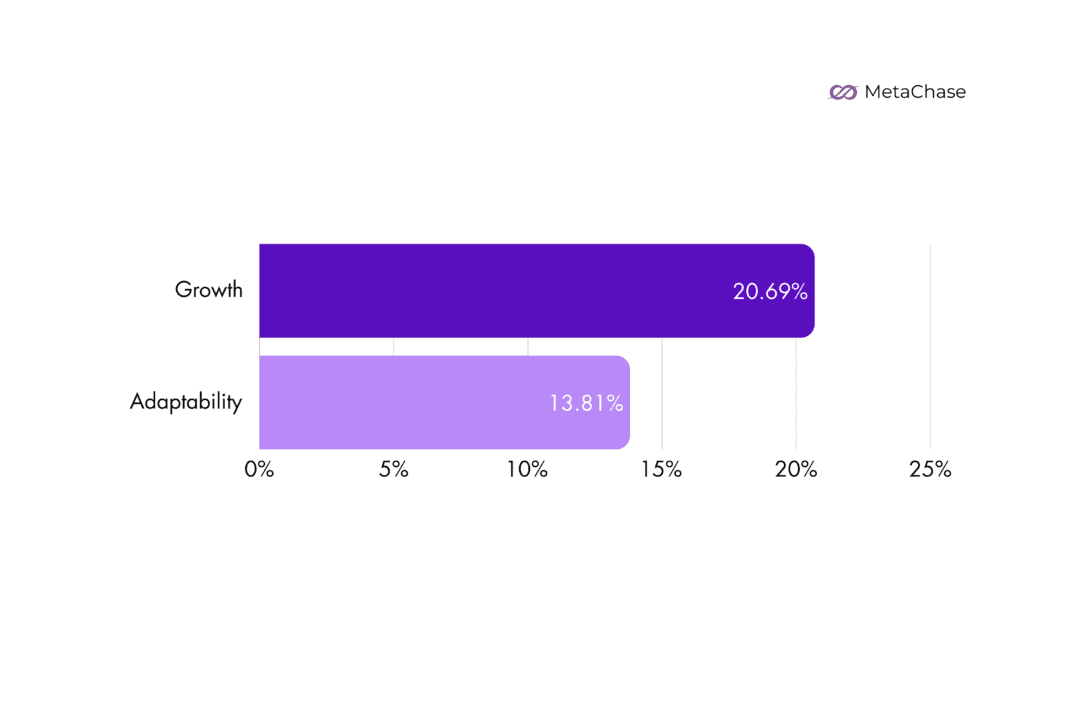
Within the response patterns, growth-oriented behavior appeared far more consistently than adaptability.
Tech professionals demonstrated strong preference toward:
- Learning opportunities
- Faster career progression
- Dynamic work environments
- Continuous growth
However, behavioral consistency degraded sharply when environments introduced shifting priorities, ambiguous execution frameworks, volatile workflows, and sustained operational pressure.
The challenge was often not learning itself but maintaining execution consistency while conditions around the work continued changing.
This distinction is becoming increasingly visible in modern workplaces where teams now operate through AI-assisted workflows, leaner team structures, cross-functional teams, and rapid coordination cycles. In many environments today, professionals are expected not only to learn continuously but also adapt continuously while execution expectations continue accelerating around them.
This gap typically surfaces during execution, especially in environments where stability, clarity, and workflows change faster than individuals can comfortably recalibrate around.
Growth may drive ambition. Adaptability determines how sustainably that ambition continues operating once conditions stop remaining stable.
Collaboration > Ownership
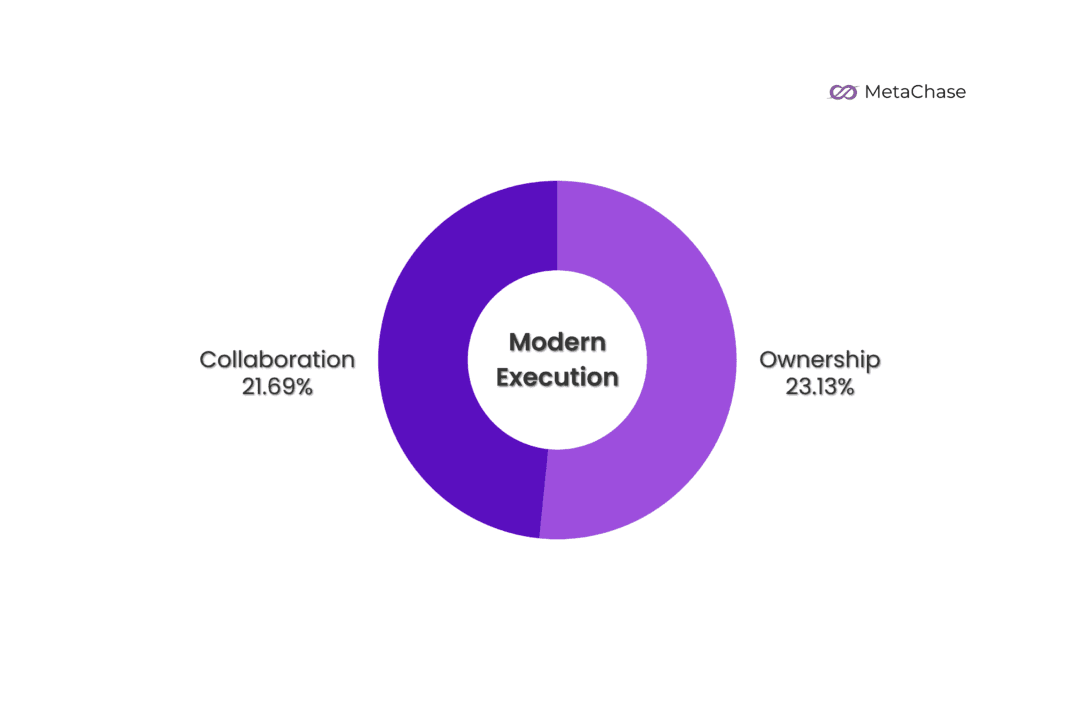
In many traditional work environments, collaboration and ownership were often treated as separate working styles.
Professionals were generally expected to lean more heavily toward one side:
- Collaborative execution
- Independent ownership
Historically, collaborative individuals were leveraged for shared execution, lateral team coordination, and consensus-based problem-solving. Conversely, ownership-driven professionals were deployed to execute autonomously, drive independent technical decisions, and maintain isolated accountability.
However, modern work environments increasingly blur that distinction. In many organizations today, professionals are expected to sustain continuous cross-team collaboration while simultaneously retaining absolute individual accountability, even as strategic priorities pivot and release cycles accelerate.
Rather than separating strongly into one working style over the other, the response patterns increasingly reflected professionals balancing both tendencies simultaneously:
- Team-oriented execution
- Individual accountability
In many environments today, collaboration may help execution move faster initially, but definitive ownership often becomes more visible later, especially once structure, clarity, or guidance begin weakening under pressure.
Growth > Stability
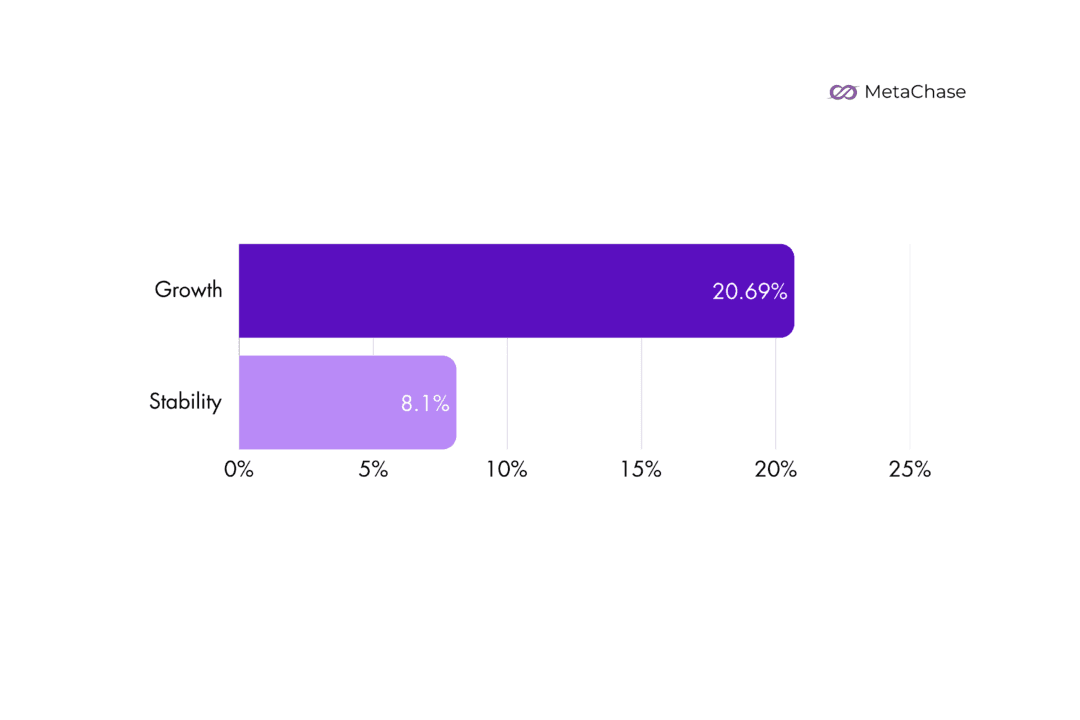
Across our analyzed response patterns, growth-oriented behaviors significantly outweighed standard preferences for long-term stability.
The shift was not necessarily driven by instability itself, but by increasing preference toward continuous learning, accelerated career progression, dynamic environments, and broader execution exposure.
In many industries today, work environments are evolving faster than traditional long-term career structures were originally designed for. Professionals are increasingly evaluating opportunities through a different lens.
Not just:
- Tenure
- Predictability
- Organizational permanence
But also:
- Learning velocity
- Role acceleration
- Execution exposure
- Adaptability to changing environments
This does not necessarily indicate lower commitment. In many cases, it reflects how professionals are adapting to industries where workflows, technology, and execution expectations continue shifting more rapidly than before.
The response patterns also reflected a broader tension emerging within modern work environments. Growth opportunities are becoming increasingly attractive and at the same time long-term stability is becoming more difficult to sustain consistently under changing operational conditions.
What This Means for Hiring
Traditional evaluation metrics fail to capture how individuals function once execution pressure builds.
Organizations must identify professionals who can:
- Adapt under uncertainty
- Maintain ownership without constant supervision
- Collaborate inside changing team structures
- Sustain execution consistency while priorities shift
Simultaneously, candidates evaluate employers based on growth exposure, operational speed, and execution visibility alongside compensation. The most difficult challenge is no longer identifying intent but identifying who can sustain performance once operational complexity compounds.
Final Thoughts
Work environments today are evolving faster than many traditional hiring approaches were originally designed for. Resumes, interviews, experience, and technical capability still remain important, but they no longer capture the full picture of how individuals continue operating once execution conditions begin changing in real time.
The response patterns increasingly reflected a broader shift happening throughout modern workplaces. Execution behavior, adaptability, collaboration, ownership, learning velocity, and operational consistency are deeply interconnected within leaner, AI-augmented workflows.
Modern hiring requires understanding who can perform effectively not just under stable conditions, but when operational complexity compounds. Understanding how talent actually functions is now just as critical as knowing what talent already knows.
About the Author

Elvin Vincent
Managing Partner & COO
Elvin is the catalyst behind MetaChase’s operational precision and candidate-centric philosophy. He specializes in decoding complex organizational needs to find the "perfect-fit" talent that others overlook. Approachable yet deeply analytical, Elvin ensures that every "Search" culminates in a transformative hire that fuels long-term enterprise growth.
View Profile