
Beyond the WFH Debate: Is Your Hybrid Model Truly Working?
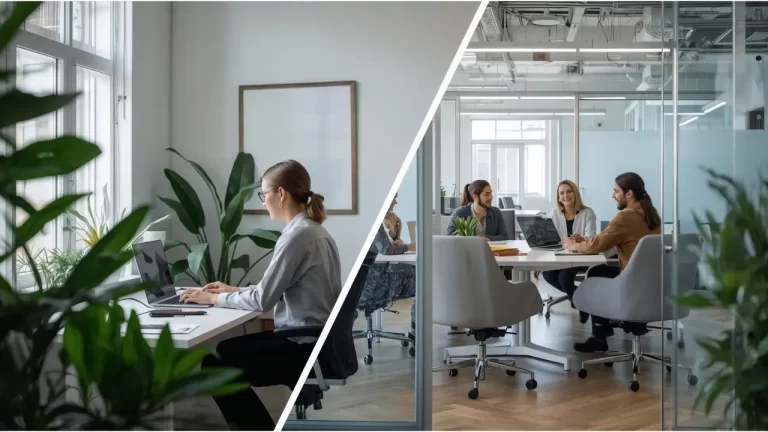
Remember early 2020? The world of work felt like a grand, unplanned experiment. We were all thrown into the deep end of remote work, and for a while, the pendulum swung wildly.
Now, years later, that pendulum is supposed to be settled. But has it?
Across boardrooms and virtual town halls, the question remains the same: “Have we found the right balance?” The initial scramble has been replaced by a more strategic, and sometimes contentious, conversation about what the future of work should actually look like. The truth is, there isn’t one answer; there’s a spectrum of them, and leaders are navigating this new terrain with a mix of data, intuition, and a healthy dose of trial and error.
The Unmistakable Pull of Human Connection
For many, the office is more than just a place to work; it’s a hub for culture and collaboration. We’re hearing a consistent theme from leaders about what gets lost when teams are fully distributed. As Naman Prajapati, a Functional Consultant from Silver Touch Technologies puts it, “In the real world, people need to be on the floor. We misunderstand communication. In-person works much better”.
This sentiment is about the subtle, powerful currents of collaboration that are difficult to replicate through a screen. It’s about “the bond with the peers,” a crucial element that Bhavin Patel, AVP Senior Partnerships from 7Span credits for making their hybrid model successful. It’s the “osmosis” that Prabhav Sharma, Founder at Zintellix mentions, where software engineers absorb knowledge and solve problems faster simply by being in the same room three days a week. The risk of losing this is real.
Sonal Joshi, Channel Partnership Manager at Urban Piper, astutely observes that without intentional effort, the very “concept of work culture fades away”. It’s a challenge that even those who champion flexibility, like Meet Dholakia, C0-founder and Chief Solution Architect from Entrivis Tech, acknowledge. While believing in a 100% onsite model, he emphasizes that the core issue isn’t about being anti-remote, but pro-flexibility on a case-by-case basis.
The Productivity Paradox and Generational Shifts
Beyond culture, leaders are laser-focused on output and efficiency. For some, the data is clear.
Vivek Singh, Project Manager from Webkul holds a strong belief in working from the office, arguing that with WFH, “productivity decreases” as employees settle into a comfort zone. The concerns are tangible, touching on issues of accountability. For instance, Naval Saini, Senior Developer of Oxrow notes that a hybrid model helps mitigate risks like “moonlighting” among developers.
This managerial perspective is crucial. As Sonal Joshi shared, “Higher management always had a problem with hybrid working,” and finding that “perfect balance” is the puzzle everyone is trying to solve.
Adding another layer to this complexity is the generational shift. Shobhit Singh, Co-founder at Observance Technologies, points to a fascinating divide. “Gen Z expect remote internships,” he notes, highlighting the expectations of a new wave of talent. Yet, he balances this with a pragmatic approach: junior talent with 1-3 years of experience benefits immensely from being onsite, while senior professionals with over five years of experience can thrive remotely.
This isn’t a simple binary choice anymore. It’s about designing a bespoke model that nurtures junior talent, empowers senior contributors, and preserves the cultural fabric that holds it all together.
The MetaChase Perspective: Asset or Liability?
So, what separates the companies thriving from those just surviving? From our vantage point, the discussion has moved beyond location. The real question leaders should be asking is this: “Is our work model a strategic asset or a cultural liability?”
What we’re seeing is a clear divide. The companies struggling are often stuck in a legacy mindset of control vs. trust. They’re trying to manage a 21st-century workforce with a 20th-century rulebook, focusing on presence over performance. This approach often leads to micromanagement, burnout, and a revolving door of top talent.
The companies finding the right balance, however, are using their hybrid model as a powerful strategic advantage. They are transforming their operations by:
- Building Output-Driven Cultures: They define success by results, not by hours clocked in at a desk. Trust is the default, which empowers teams to do their best work, wherever they are.
- Attracting Talent Globally: By removing geographical barriers, they’ve opened the floodgates to a wider, more diverse pool of exceptional candidates.
- Optimizing Costs: They’re making smart decisions about real estate and operational expenses, reinvesting those savings into their people and technology.
At MetaChase, we partner with leaders to build these kinds of winning ecosystems. Our data-driven, partnership-oriented approach goes beyond just filling a role. We help you architect a talent strategy that aligns with your specific business goals, ensuring that every hire strengthens your culture and drives your mission forward. We’re here to help you build a future where conviction, perseverance, and opportunity seamlessly connect.
Shaping Our Tomorrow, Together
The evolution of hybrid work is less about finding a final answer and more about embracing a continuous, dynamic process. The leaders who succeed won’t be the ones who pick a side, but those who build an ecosystem, one where culture, strategy, and talent are perfectly aligned.
The great work-from-anywhere experiment isn’t over. In many ways, it’s just beginning. Now, the goal isn’t just to make it work; it’s to make it exceptional.
As the renowned management consultant Jim Rohn said,
“Action is the real measure of intelligence”.
The most intelligent move we can make now is to listen, adapt, and act decisively to build a workplace that empowers everyone.